NBCCD alumni
Ralph Simpson Named to Artelier's "10 Artists to Watch" at Collect 2026
NBCCD alumnus Ralph Simpson, whose sculptural plant-fibre work is rooted in the fields, forests, and wetlands of New Brunswick, has been named one of the “10 Top Artists to Watch from Collect 2026” by UK art consultancy Artelier.
The recognition comes on the heels of Ralph’s presentation at Collect, the only annual international art fair dedicated to museum-quality contemporary craft and design held at Somerset House in London, UK.
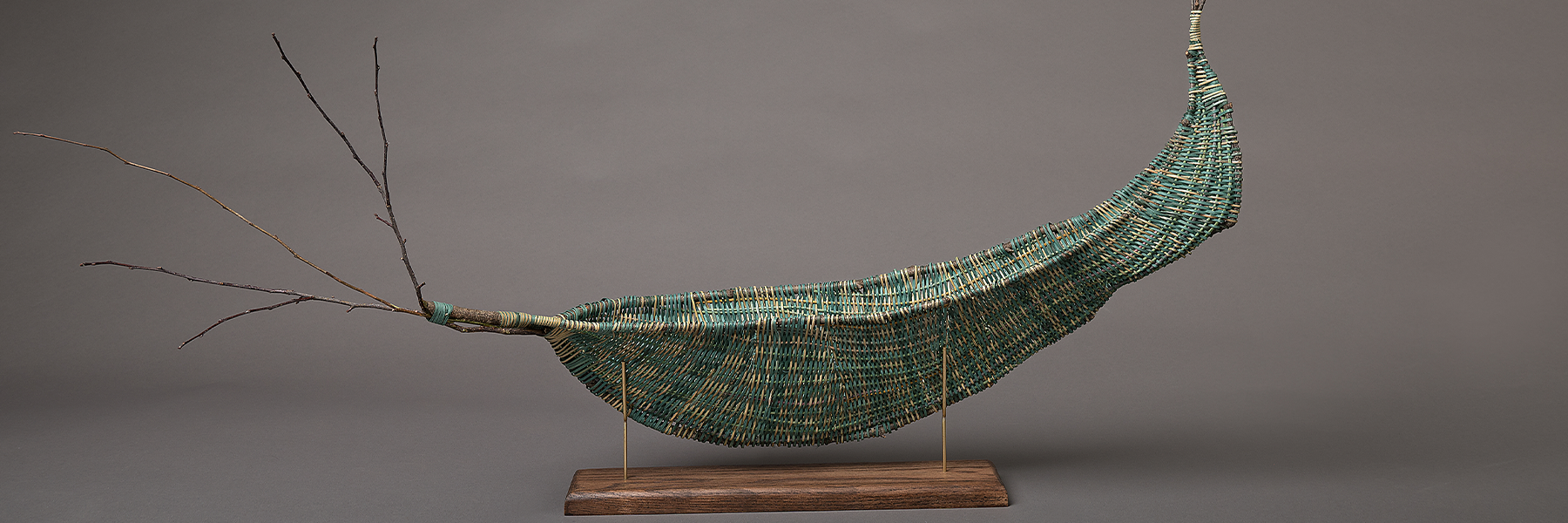
Simpson forages black ash, willow, cedar bark, and other locally sourced plant fibres, harvesting materials through environmentally sustainable practices. His sculptural works move between traditional basketry and contemporary sculpture, translating the landscapes of New Brunswick into forms that have now captured international attention.
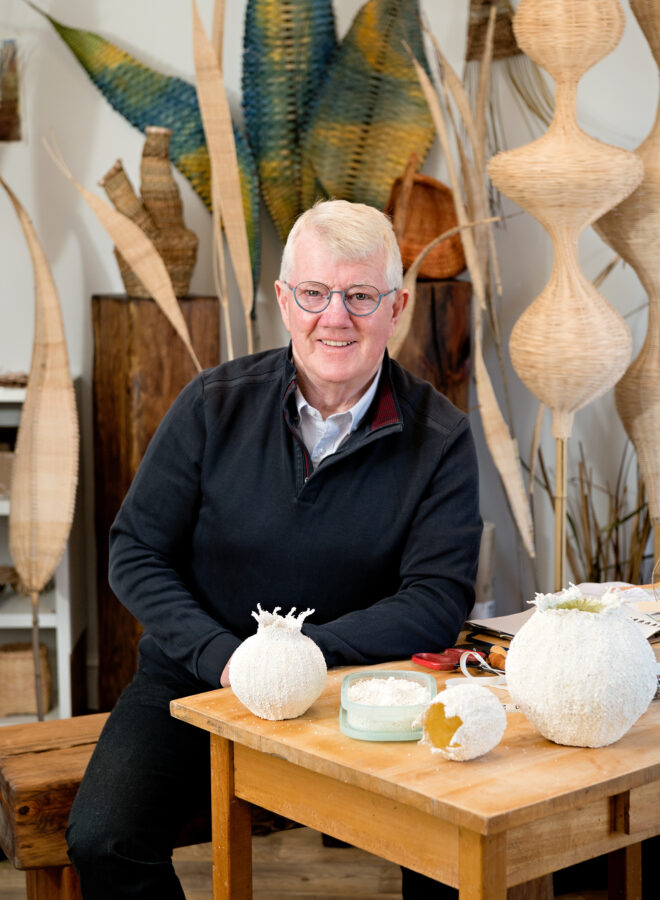
Photo by Kelly Simpson
A Quiet Practice, Recognized on a Global Stage
For him, the Artelier honour landed as both deeply humbling and profoundly validating.
“When your daily work involves foraging local, indigenous plant fibres along rivers and forests, spending hours prepping willow, bark, or rushes, and weaving them into contemporary sculptural forms, you operate in a very quiet, slow rhythm,” he says. “To have that quiet practice recognized on an international stage like Collect at Somerset House, alongside such exceptional global craft artists, felt gratifying.”
His work brings the traditional craft of plant-fibre weaving into dialogue with contemporary fine art. “It was an incredible honour that energized my commitment to listening to what the land and its materials have to tell us.It felt like a celebration of sustainable, ecologically grounded art that honours the natural world and material integrity.”
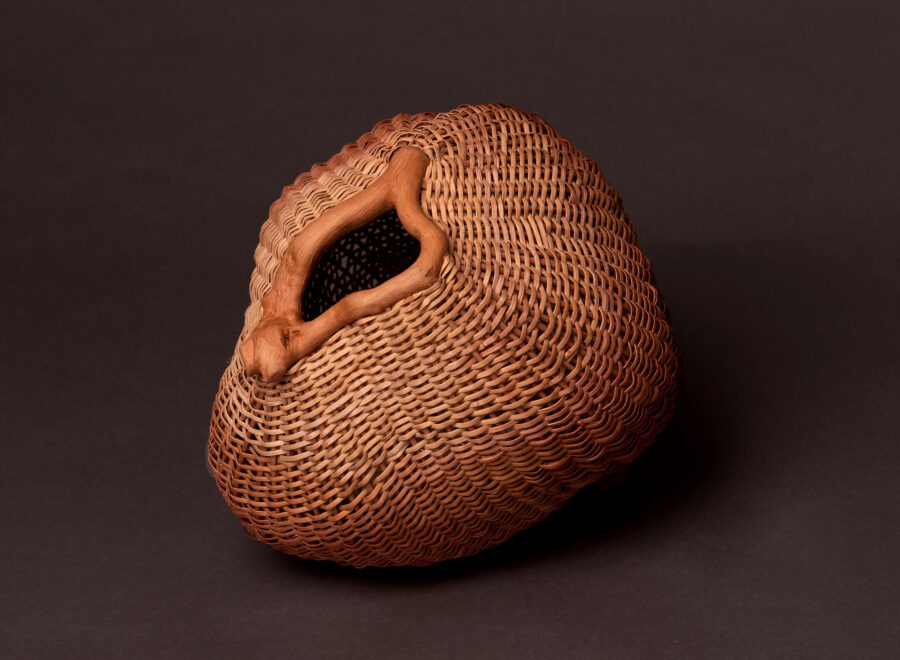
Photo by Kelly Simpson
Roots and Branches
Simpson describes his relationship to place in terms of roots and branches. Fredericton and the wider province give him the grounding his practice depends on.
“Living and working in Fredericton offers a reflective, uninterrupted environment,” he says. “The natural landscape and slower rhythm of the region allow for deep focus, experimentation, and the patience required for my work.”
The St. John River Valley, he adds, informs his aesthetic choices directly “from organic forms and textures to the choice of materials and weaving techniques.”
Exhibiting internationally, by contrast, pushes his practice outward. “Preparing work for venues pushes me to elevate my standards, refining my technical precision, presentation, and artistic discipline to meet rigorous global standards. New Brunswick provides the roots, quiet space, and identity that sustain my studio practice, while international exhibitions provide the branches, extending my work outward and continually challenging me to grow as an artist.”
“A Bridge Between Nature and Fine Art.”
Before turning to fibre art full time, he worked for years as a forest research biologist, later completing his Diploma at New Brunswick College of Craft & Design (NBCCD) after retirement. Ralph credits the college with turning his hobby into a professional practice.
“Returning to NBCCD after retirement transformed my work from a hobbyist pastime into a fully realized, professional practice. The structured, supportive environment, with feedback from faculty, helped move me from viewing myself as a hobbyist to identifying fully as an artist,” says Simpson.
“So many opportunities were available to me because of my connections at NBCCD.”
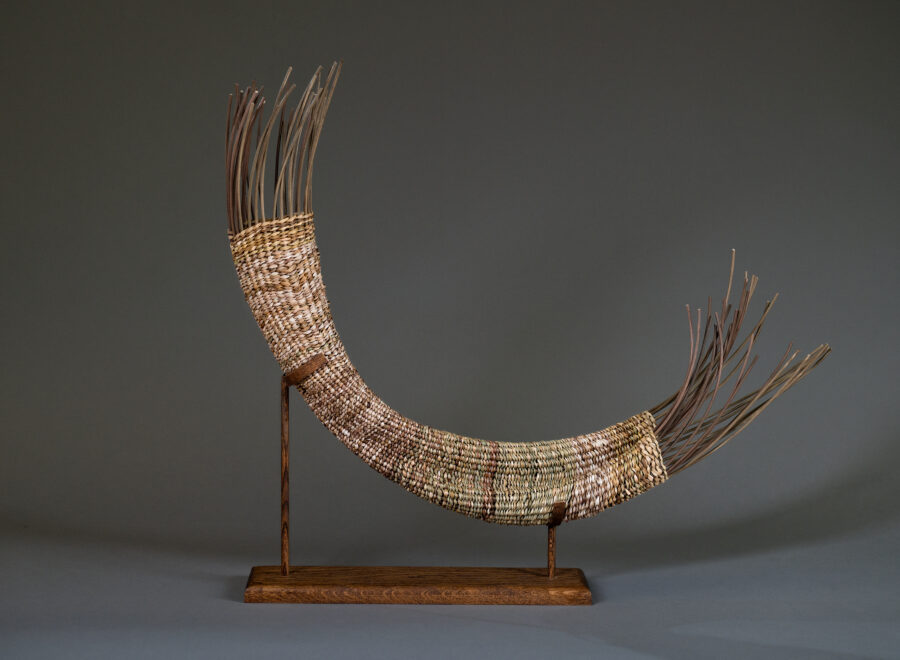
Photo by Kelly Simpson
Why Dedicated Craft and Art Institutions Matter
Asked about the broader role institutions like NBCCD play in New Brunswick’s craft community, Simpson points to their function as a cultural anchor.
“Institutions like NBCCD play a vital role in preserving traditional techniques while driving contemporary innovation,” he says. “They provide structured studio environments, safety standards, and specialized technical instruction that are difficult or cost-prohibitive for individuals to access independently, including the business skills: pricing, marketing, grant writing, and gallery relations that keep a studio practice viable.”
He also credits NBCCD with building the kind of community that sustains artists long after graduation.
“It serves as a vibrant hub where artists, faculty, and visiting creators connect, collaborate, and exchange feedback,” he says. “These relationships often evolve into long-term professional networks, residencies, studio co-ops, and collective initiatives that keep local creative talent in the province.”
Advice for Emerging Artists
For people exploring material-based or environmentally grounded practices, Simpson’s advice starts with the material itself. “View your material not just as a medium to control, but as an active partner in your process. Continue to build the relationship with your materials, while practicing environmental stewardship and local materiality.”
And above all, patience. “Crafting a distinct signature takes time, repetition, and deep studio hours. Trust the slow process, build your community, and allow your personal narrative to emerge naturally through the work.”
What’s Next: Venice
Ralph’s presentation caught the attention of scouts from the Michelangelo Foundation in Geneva, Switzerland, and he has been invited to exhibit at the Homo Faber Biennale in Venice, Italy, in September 2026. Looking ahead, he anticipates working at a larger scale and exploring new materials within his weaving practice, along with cross-border collaborations that connect New Brunswick’s craft traditions to the global craft community.
Visit https://plantfibreartist.com/ to learn more and follow Ralph Simpson’s art practice.
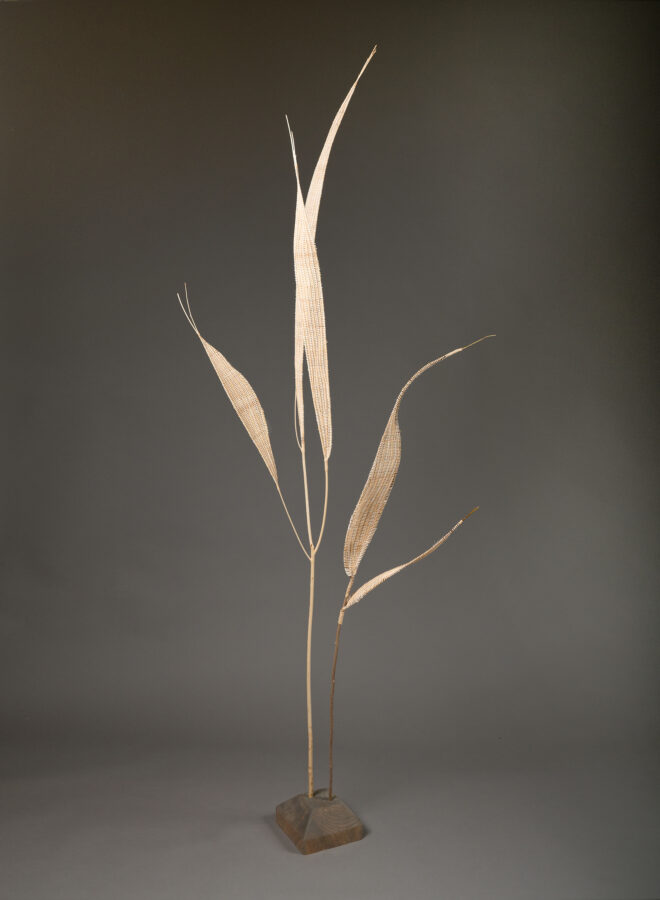
Photo by Kelly Simpson