Ceramics Student Sheryl Martinez to Exhibit at Toronto Outdoor Art Fair
NBCCD Ceramics student Sheryl Martinez will showcase her work at the Toronto Outdoor Art Fair (TOAF), taking place July 10 to 12 at Nathan Phillips Square in Toronto. One of Canada’s leading outdoor art events, TOAF brings together artists from across the country and offers visitors the chance to discover a wide range of contemporary creative practices. Martinez will present her work at Booth 9.
For Martinez, the opportunity marks an exciting milestone in a growing ceramics practice shaped by tea culture, material exploration, and a commitment to learning.
A National Platform for Emerging Work
“As a newcomer to Canada it means a whole lot,” said Martinez. “I took the chance to apply for the jury selection of TOAF because I was curious to see what Canadians are making and creating and what inspires their work. I thought that if I wanted to experience art in a compact way, so to speak, then the Toronto Outdoor Art Fair is the place to be. I feel fortunate to be given this opportunity this early while still a student.”
Originally from the Philippines, Martinez came to NBCCD to deepen her ceramics practice after completing the Foundation Visual Arts certificate. She says her time at the College has helped her make significant progress, both technically and conceptually.
“It’s been leaps and bounds in terms of development,” she said. “In Foundation Visual Arts, I was absorbing everything, especially design and art history. Then when I started the Ceramics diploma, I was able to apply those theories to my work. I can say that I now have a good grasp of the fundamentals and am also able to explore and experiment with every stage of the process.”
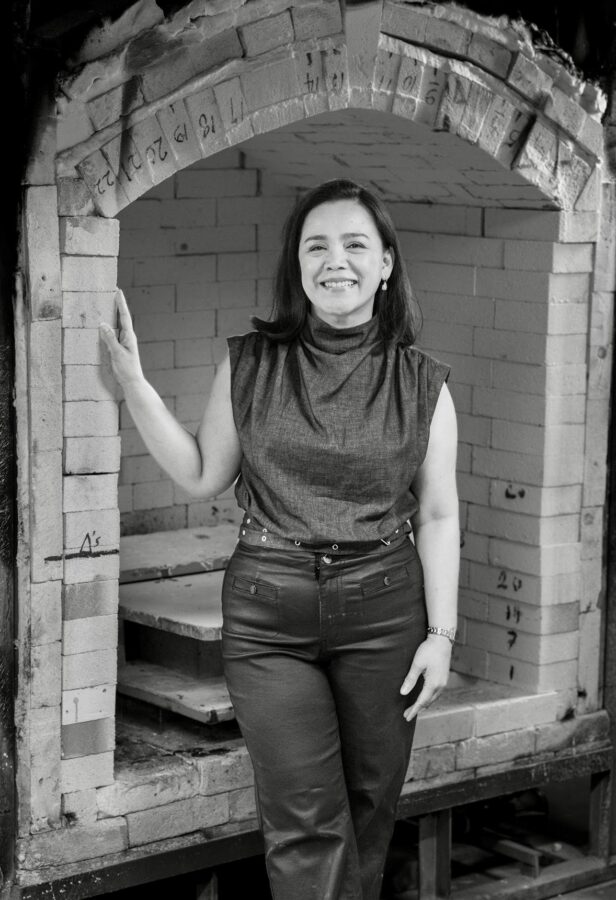
Sheryl Martinez (2026). Photo by Ross Kinney.
A Practice Rooted in Tea
Tea ware sits at the centre of Martinez’s artistic practice. Before moving to Canada, she spent more than a decade studying and teaching about tea. She is also a certified tea sommelier and the founder of a tea brand in the Philippines.
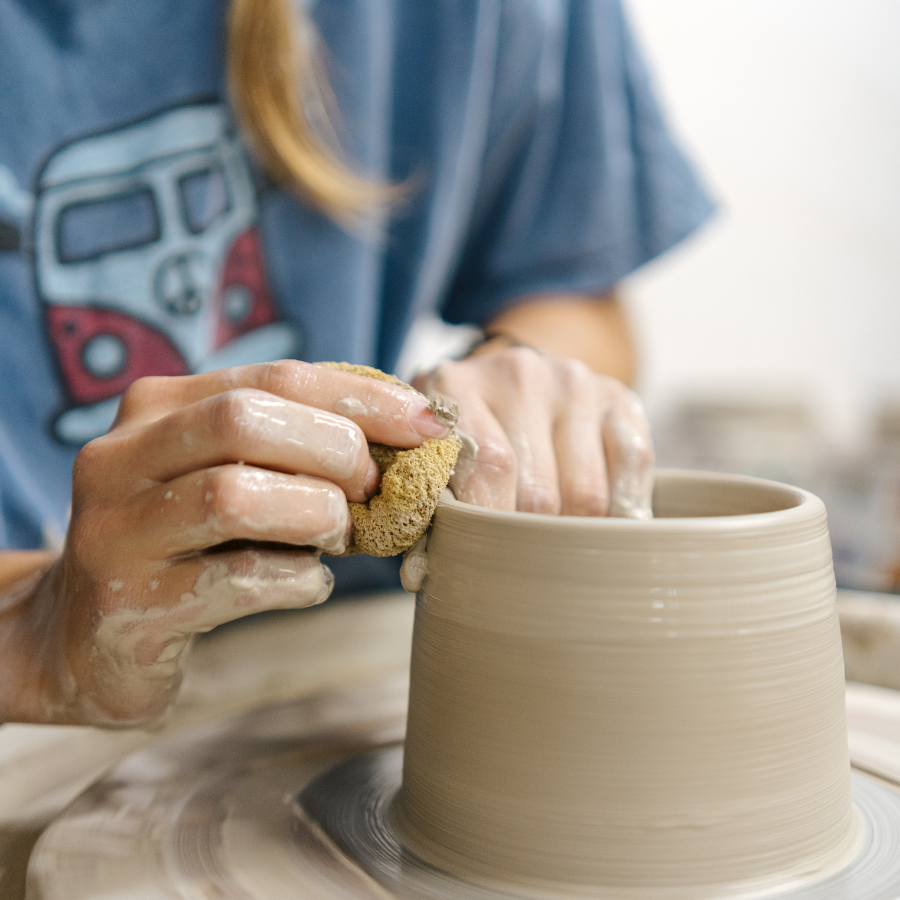
“My life’s passion is tea,” she said. “When I decided to take up pottery, it was really just to learn to make tea ware. I feel lucky in that sense because I got to focus on one thing in this vast field. It also happens to be one of the most difficult forms to make because of all the variables involved, like timing, balance, and geometry. But I like difficult things. I like to overcome challenges, so I guess it fits right into my personality.”
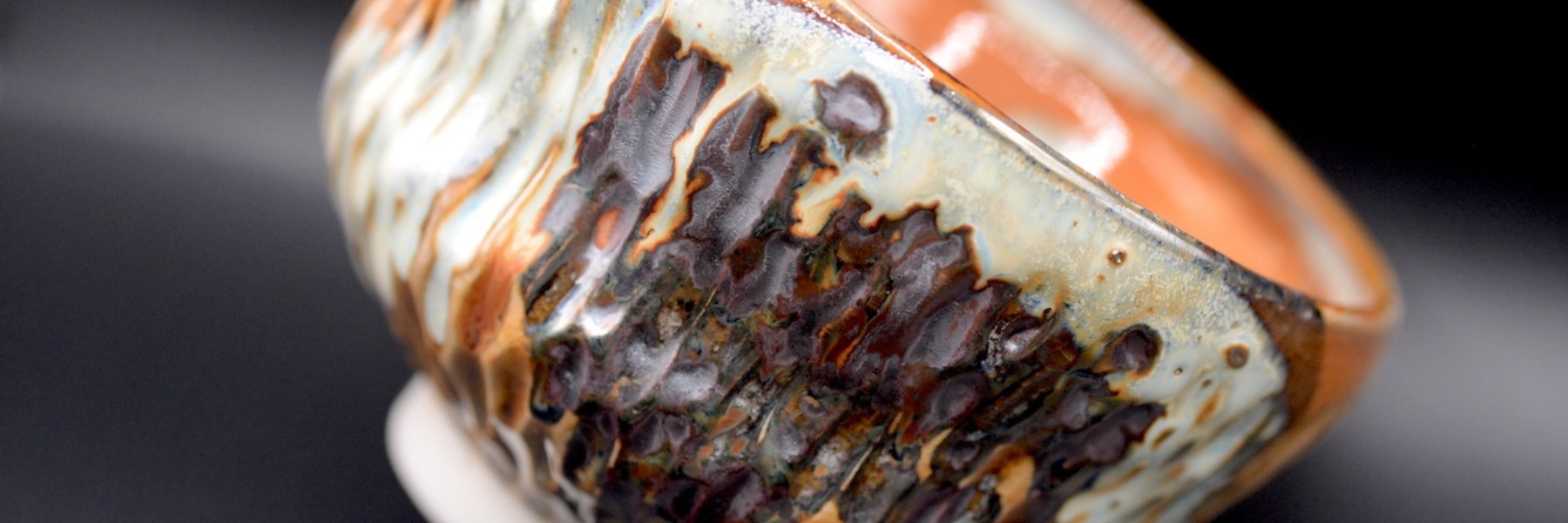
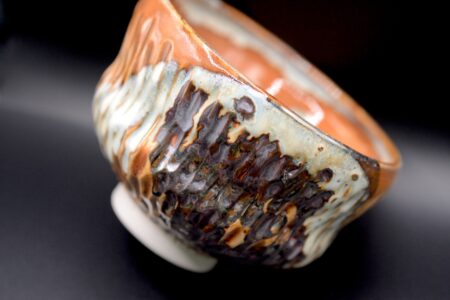
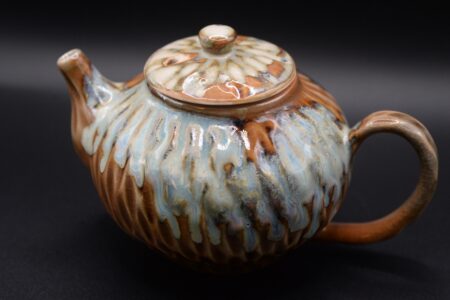
That focus has shaped a body of work grounded in function, ritual, and historical research. Martinez works primarily with porcelain and explores glaze traditions such as Tenmoku, Oribe, Celadon, and Shino.
“Porcelain is the purest form of clay and for me it resembles a blank canvas to splash paint, or in this case, glaze on,” she said. “At NBCCD, we are taught how to make our own clay and customize it according to the properties we want. I chose porcelain, and I’ve been very happy with the clay body I make and use.”
Her interest in historical glazes is closely tied to her study of tea and tea culture across China, Japan, and Korea.
“These ancient glazes were the first glazes I was exposed to as a tea person,” she said. “While studying tea and its history, I also learned about the tea wares and their cultural significance. That familiarity made me want to explore these glazes more deeply and help carry them into contemporary ceramics.”
Exploring Porcelain and Historical Glazes
Martinez’s work often combines historical glaze traditions with contemporary experimentation, a process she describes as equal parts curiosity, chemistry, and persistence.
“Through a lot of experimentation and hundreds of test tiles,” she said. “What we’ve learned so far are the chemical properties of these glazes, what’s in them, what they do, and how to read recipes to understand compatibility. I’ve always liked layering because it brings out so much character and texture.”
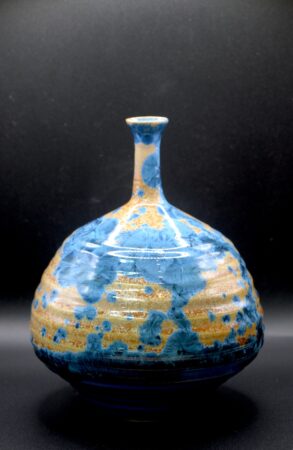
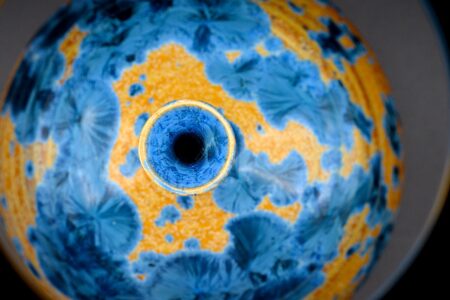
At TOAF, Martinez will present a collection of crystalline glaze work, a new direction in her ceramics practice that grew out of a glaze line blend assignment at NBCCD.
“This is the latest in my ceramics exploration,” she said. “I came across it when my teacher Liz pointed out that I may have created an aventurine glaze. Succeeding firings also yielded one or two unintended crystal surfaces, so I decided to research it. The first thing I read was that only one in every thousand potters tries it because of how demanding it is in terms of resources and precision. So of course, I had to give it a try.”
While she embraces the unpredictability of reduction firing, Martinez says crystalline glazes appeal to another side of her practice.
“It’s those exacting requirements that drew me to it,” she said. “Crystalline glazes appeal to the part of my nature that appreciates precision.”
Learning Through Experimentation at NBCCD
Martinez credits NBCCD’s Ceramics studio with giving her the confidence and freedom to test ideas, embrace failure, and keep pushing her work forward.
“Personally, it’s the freedom to just go for whatever I can think of,” she said. “The unofficial motto of the studio is FAAFO, and we do just that, especially with glaze development. There have been many times when results didn’t go the way I expected, good or bad, and it was accepted just as it was. There was no judging.”
She also points to the culture of encouragement across the College as an important part of her growth.
“Our Instructors are always encouraging. Their usual answer to our questions is, ‘Try it!’ The staff, instructors from other studios, the Marketing Office, and the Learning Commons all work together to give us the support we need every step of the way.”
Looking Ahead
As Martinez prepares to share her work with audiences in Toronto, she hopes her practice resonates with people who are considering their own creative path.
“I hope to inspire them, especially if they are thinking of taking up pottery,” she said. “I got into it in midlife, and I want people to know that it’s never too late to pursue whatever it is you want to experience. Never stop learning.”
As for what comes next, Martinez is keeping an open mind.
“I have crystalline glaze and tambourine carving on my mind, but with ceramics, anything is possible,” she said. “I don’t really see exactly where my practice is going, but that’s the exciting part.”